Welcome to Our Gelid-Tech & Services Company

Air Conditioning Repair in Mansfield, TX

When your AC quits in a Mansfield summer, the house heats up fast. Gelid Tech finds the cause of the breakdown, explains what it will take to fix, and repairs it so your home cools again.

Common AC Problems We Repair

  • Warm or weak air from the vents
  • Ice on the copper refrigerant lines or indoor coil
  • Outdoor unit humming while the fan won’t spin
  • AC that turns on and off every few minutes
  • Water leaking around the indoor unit
  • Loud buzzing, grinding or squealing
  • Thermostat set to Cool with no response from the system

What Happens During an AC Repair Visit

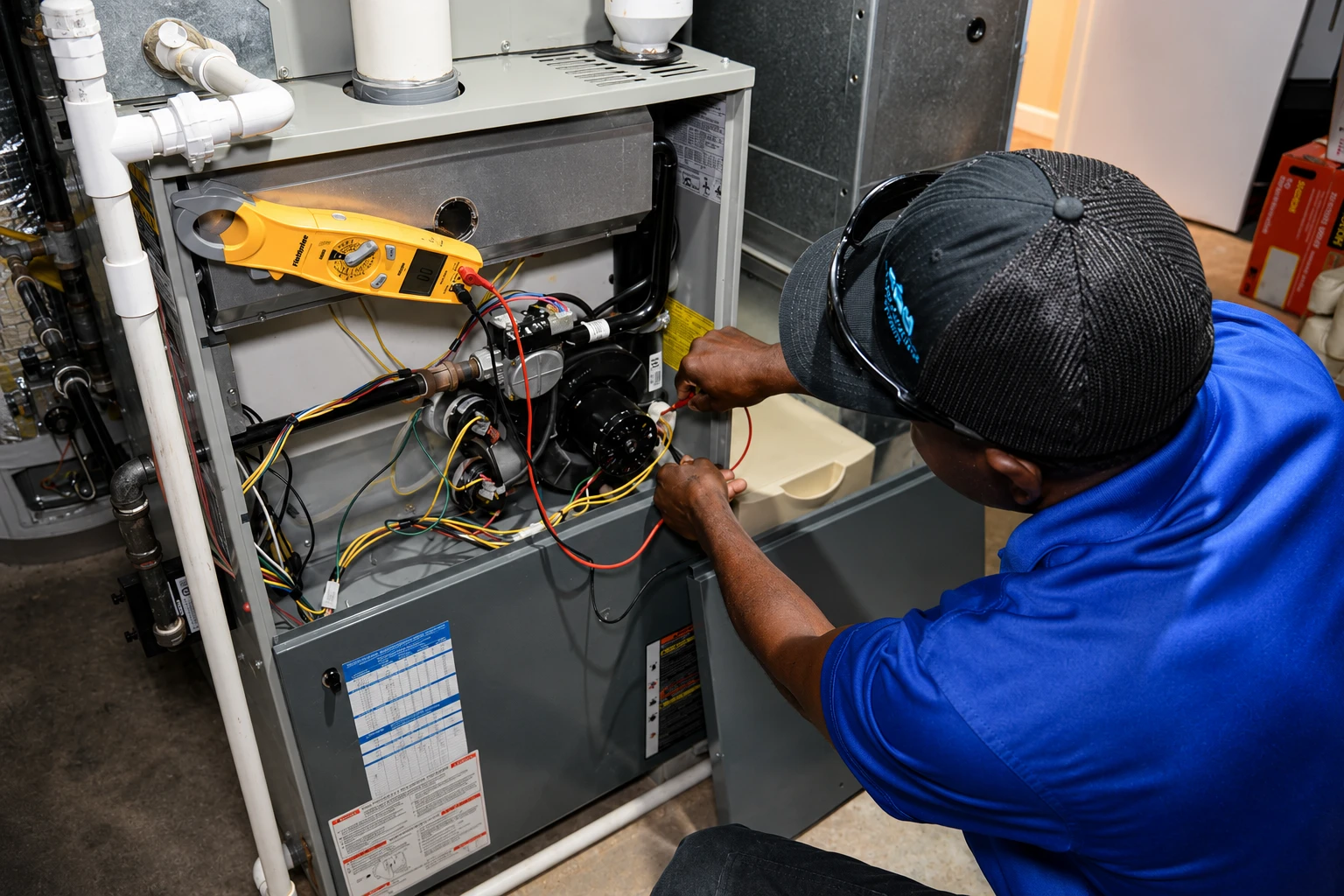
Your technician checks the thermostat, electrical parts, refrigerant pressures, coils, fan motors and condensate drain. Failed capacitors, contactors and fan motors are the most common causes of a no-cool call, and many can be replaced the same visit. You see the problem and approve the price before work starts.

Before You Call

These quick checks solve a surprising number of problems:

  1. Set the thermostat to Cool, a few degrees below room temperature, and replace its batteries.
  2. Check your electrical panel for a tripped breaker.
  3. Replace a dirty air filter. A clogged filter can freeze the coil.
  4. If you see ice, turn the AC off and let it thaw before calling. Running it frozen can damage the compressor.

Repair or Replace Your Air Conditioner?

Repair usually makes sense for a system under 10 years old with one failed part. If your AC is 12 to 15 years old, uses R-22 refrigerant or needs repairs every summer, AC installation may cost less over time. We will tell you which side your system is on.

Prevent the Next Breakdown

Most AC failures start small: a weak capacitor, a dirty coil, a clogged drain. A spring HVAC maintenance visit catches them before the first heat wave. If your AC fails after hours or in extreme heat, use our emergency HVAC service.

AC Parts We Repair and Replace

Most air conditioner breakdowns come down to a handful of parts. Knowing what each one does makes it easier to understand your technician’s diagnosis.

  • Capacitors: they give the compressor and fan motors the jolt they need to start. Heat wears them out, and a failed capacitor is the most common reason an outdoor unit hums but won’t run.
  • Contactors: an electrical switch that turns the outdoor unit on when the thermostat calls for cooling. Pitted or stuck contacts can stop the AC or keep it running nonstop.
  • Condenser fan motors: the fan on top of the outdoor unit pushes heat out of your home. When it stops, pressures rise and the system shuts down or overheats.
  • Blower motors: the indoor fan that moves air through your ducts. A weak blower means weak airflow and, often, a frozen coil.
  • Refrigerant leaks: we locate the leak, repair it where practical, and recharge to the manufacturer’s specification.
  • Evaporator and condenser coils: dirty coils can’t move heat, so the system runs longer and cools less. Leaking coils may need repair or replacement.
  • Condensate drains and float switches: a clogged drain can overflow the pan or trip a safety switch that turns the AC off.
  • Thermostats and wiring: loose wires, dead batteries and failed thermostats can look like a broken AC.
  • Compressors: the heart of the system. We test compressors carefully, because a compressor failure is often the point where replacement makes more sense than repair.

Why Air Conditioners Break Down in North Texas

A Mansfield air conditioner may run most of the day for five months straight. That workload is the main reason parts fail here more often than in milder climates. Capacitors and motors age faster in 100-degree heat. Spring storms and power surges can damage electrical parts. Grass clippings, leaves and cottonwood fluff clog the outdoor coil, which makes the system work harder still.

Other common causes are filters left too long, closed or blocked vents, and refrigerant leaks that slowly drain the system’s cooling power. Many of these can be caught early with a spring HVAC maintenance visit.

Small Problem or Big One?

Some symptoms usually point to a simple repair, while others need attention right away.

  • Usually a quick fix: an outdoor unit that hums but won’t start, a system that stopped after a storm, water in the drain pan, or a thermostat that won’t respond.
  • Call soon: warm air from the vents, ice on the lines, the AC running all day without reaching the set temperature, or a sudden jump in your electric bill.
  • Turn the system off and call now: burning or electrical smells, grinding or screeching noises, a breaker that trips again after you reset it, or water leaking through a ceiling.

Running a system with a serious fault can turn a modest repair into a compressor replacement, so it pays to stop and call.

What Affects the Cost of an AC Repair

The price depends on the part that failed, how easy it is to reach, and whether refrigerant is involved. A capacitor or contactor is usually a small repair. Fan motors, refrigerant leak repair and coil work cost more. Your technician gives you the price before starting, so you can decide between repair and replacement with the numbers in front of you.

Serving Mansfield Homes

Gelid Tech is based in Mansfield, TX 76063 and repairs air conditioners for homes in Mansfield and nearby communities. Call (682) 392-2998 to check service at your address.

AC Repair FAQ

Why is my AC running but not cooling? The usual causes are a dirty filter, a frozen coil, low refrigerant from a leak or a failed capacitor. Replace the filter first. If the air is still warm, turn the system off and call.

Why is there ice on my AC lines? Ice usually means low airflow from a dirty filter or blocked vents, or low refrigerant. Turn the AC off to let it thaw and schedule a repair.

Can you add refrigerant to my AC? Yes, but refrigerant does not get used up. Low refrigerant means a leak, so we look for the leak instead of only refilling it.

How long does an AC repair take? Most common repairs, like a capacitor, contactor or fan motor, are finished in one visit. Leak repairs and coil work can take longer.

Is it normal for my AC to run all day in summer? On a 100-degree afternoon, long run times are normal. If it runs all day and still can’t reach the set temperature, something is wrong.

What temperature should I set my AC to? Many homeowners find 74 to 78 degrees comfortable and efficient. Setting it much lower won’t cool the house faster.

Can a dirty outdoor unit cause problems? Yes. A clogged condenser coil can’t release heat, so the system runs longer, costs more and is more likely to overheat. Rinse debris off gently with a hose, or have it cleaned during a tune-up.

Need your AC fixed? Call (682) 392-2998 or request AC repair online.

Ready to book this service?

Tell us what your heating or cooling system is doing and we will schedule a technician to look at it. Not sure this is the right service? Call and describe the problem.

Heating or AC out right now?

Call us directly. For breakdowns that can’t wait, see our emergency HVAC service.

Ask a Technician

Have a question about this service or your system? Send it and our team will get back to you during business hours.

When your AC quits in a Mansfield summer, the house heats up fast. Gelid Tech finds the cause of the breakdown, explains what it will take to fix, and repairs it so your home cools again.

Common AC Problems We Repair

  • Warm or weak air from the vents
  • Ice on the copper refrigerant lines or indoor coil
  • Outdoor unit humming while the fan won’t spin
  • AC that turns on and off every few minutes
  • Water leaking around the indoor unit
  • Loud buzzing, grinding or squealing
  • Thermostat set to Cool with no response from the system

What Happens During an AC Repair Visit

Your technician checks the thermostat, electrical parts, refrigerant pressures, coils, fan motors and condensate drain. Failed capacitors, contactors and fan motors are the most common causes of a no-cool call, and many can be replaced the same visit. You see the problem and approve the price before work starts.

Before You Call

These quick checks solve a surprising number of problems:

  1. Set the thermostat to Cool, a few degrees below room temperature, and replace its batteries.
  2. Check your electrical panel for a tripped breaker.
  3. Replace a dirty air filter. A clogged filter can freeze the coil.
  4. If you see ice, turn the AC off and let it thaw before calling. Running it frozen can damage the compressor.

Repair or Replace Your Air Conditioner?

Repair usually makes sense for a system under 10 years old with one failed part. If your AC is 12 to 15 years old, uses R-22 refrigerant or needs repairs every summer, AC installation may cost less over time. We will tell you which side your system is on.

Prevent the Next Breakdown

Most AC failures start small: a weak capacitor, a dirty coil, a clogged drain. A spring HVAC maintenance visit catches them before the first heat wave. If your AC fails after hours or in extreme heat, use our emergency HVAC service.

AC Parts We Repair and Replace

Most air conditioner breakdowns come down to a handful of parts. Knowing what each one does makes it easier to understand your technician’s diagnosis.

  • Capacitors: they give the compressor and fan motors the jolt they need to start. Heat wears them out, and a failed capacitor is the most common reason an outdoor unit hums but won’t run.
  • Contactors: an electrical switch that turns the outdoor unit on when the thermostat calls for cooling. Pitted or stuck contacts can stop the AC or keep it running nonstop.
  • Condenser fan motors: the fan on top of the outdoor unit pushes heat out of your home. When it stops, pressures rise and the system shuts down or overheats.
  • Blower motors: the indoor fan that moves air through your ducts. A weak blower means weak airflow and, often, a frozen coil.
  • Refrigerant leaks: we locate the leak, repair it where practical, and recharge to the manufacturer’s specification.
  • Evaporator and condenser coils: dirty coils can’t move heat, so the system runs longer and cools less. Leaking coils may need repair or replacement.
  • Condensate drains and float switches: a clogged drain can overflow the pan or trip a safety switch that turns the AC off.
  • Thermostats and wiring: loose wires, dead batteries and failed thermostats can look like a broken AC.
  • Compressors: the heart of the system. We test compressors carefully, because a compressor failure is often the point where replacement makes more sense than repair.

Why Air Conditioners Break Down in North Texas

A Mansfield air conditioner may run most of the day for five months straight. That workload is the main reason parts fail here more often than in milder climates. Capacitors and motors age faster in 100-degree heat. Spring storms and power surges can damage electrical parts. Grass clippings, leaves and cottonwood fluff clog the outdoor coil, which makes the system work harder still.

Other common causes are filters left too long, closed or blocked vents, and refrigerant leaks that slowly drain the system’s cooling power. Many of these can be caught early with a spring HVAC maintenance visit.

Small Problem or Big One?

Some symptoms usually point to a simple repair, while others need attention right away.

  • Usually a quick fix: an outdoor unit that hums but won’t start, a system that stopped after a storm, water in the drain pan, or a thermostat that won’t respond.
  • Call soon: warm air from the vents, ice on the lines, the AC running all day without reaching the set temperature, or a sudden jump in your electric bill.
  • Turn the system off and call now: burning or electrical smells, grinding or screeching noises, a breaker that trips again after you reset it, or water leaking through a ceiling.

Running a system with a serious fault can turn a modest repair into a compressor replacement, so it pays to stop and call.

What Affects the Cost of an AC Repair

The price depends on the part that failed, how easy it is to reach, and whether refrigerant is involved. A capacitor or contactor is usually a small repair. Fan motors, refrigerant leak repair and coil work cost more. Your technician gives you the price before starting, so you can decide between repair and replacement with the numbers in front of you.

Serving Mansfield Homes

Gelid Tech is based in Mansfield, TX 76063 and repairs air conditioners for homes in Mansfield and nearby communities. Call (682) 392-2998 to check service at your address.

AC Repair FAQ

Why is my AC running but not cooling? The usual causes are a dirty filter, a frozen coil, low refrigerant from a leak or a failed capacitor. Replace the filter first. If the air is still warm, turn the system off and call.

Why is there ice on my AC lines? Ice usually means low airflow from a dirty filter or blocked vents, or low refrigerant. Turn the AC off to let it thaw and schedule a repair.

Can you add refrigerant to my AC? Yes, but refrigerant does not get used up. Low refrigerant means a leak, so we look for the leak instead of only refilling it.

How long does an AC repair take? Most common repairs, like a capacitor, contactor or fan motor, are finished in one visit. Leak repairs and coil work can take longer.

Is it normal for my AC to run all day in summer? On a 100-degree afternoon, long run times are normal. If it runs all day and still can’t reach the set temperature, something is wrong.

What temperature should I set my AC to? Many homeowners find 74 to 78 degrees comfortable and efficient. Setting it much lower won’t cool the house faster.

Can a dirty outdoor unit cause problems? Yes. A clogged condenser coil can’t release heat, so the system runs longer, costs more and is more likely to overheat. Rinse debris off gently with a hose, or have it cleaned during a tune-up.

Need your AC fixed? Call (682) 392-2998 or request AC repair online.